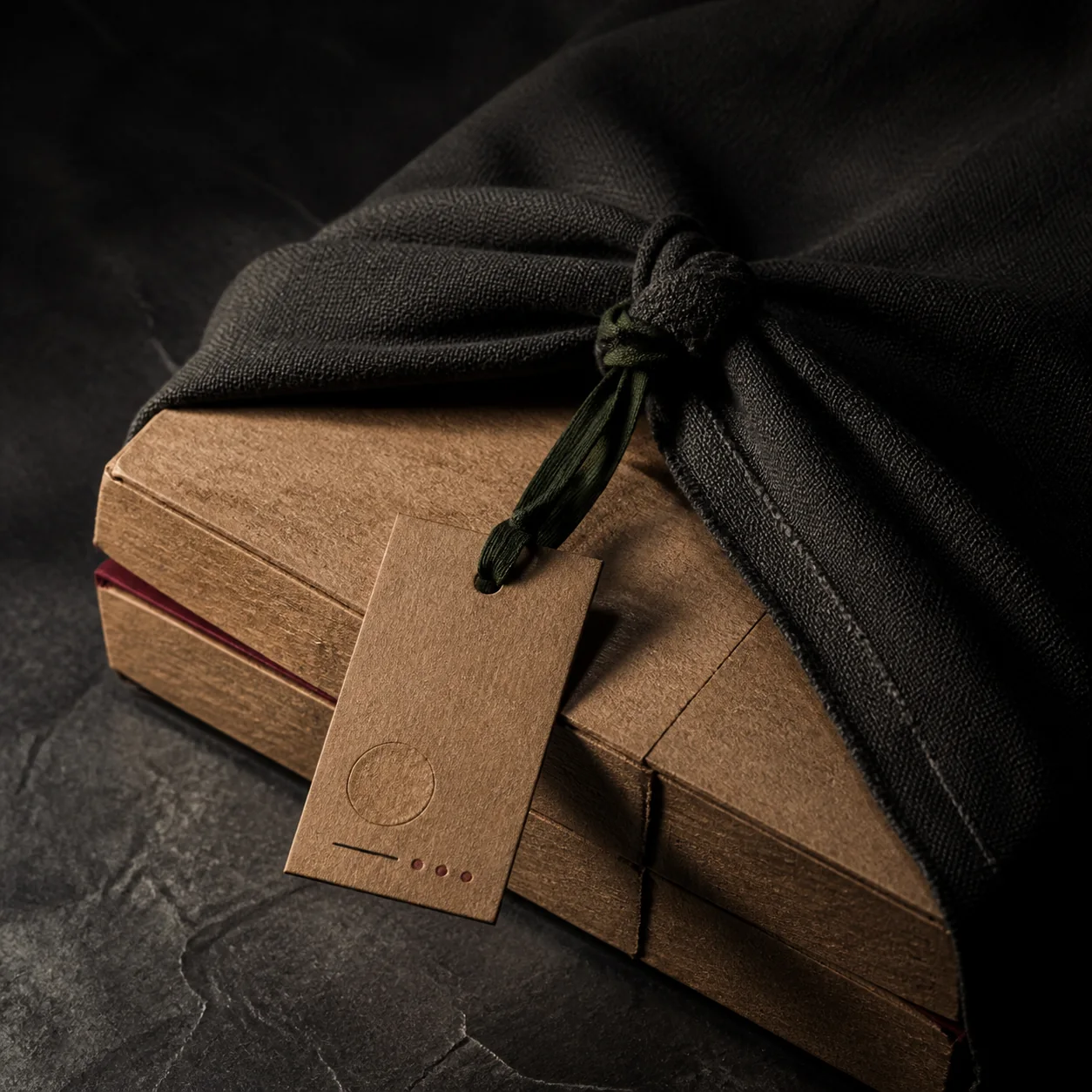
A figure enters material, and material enters daily life.
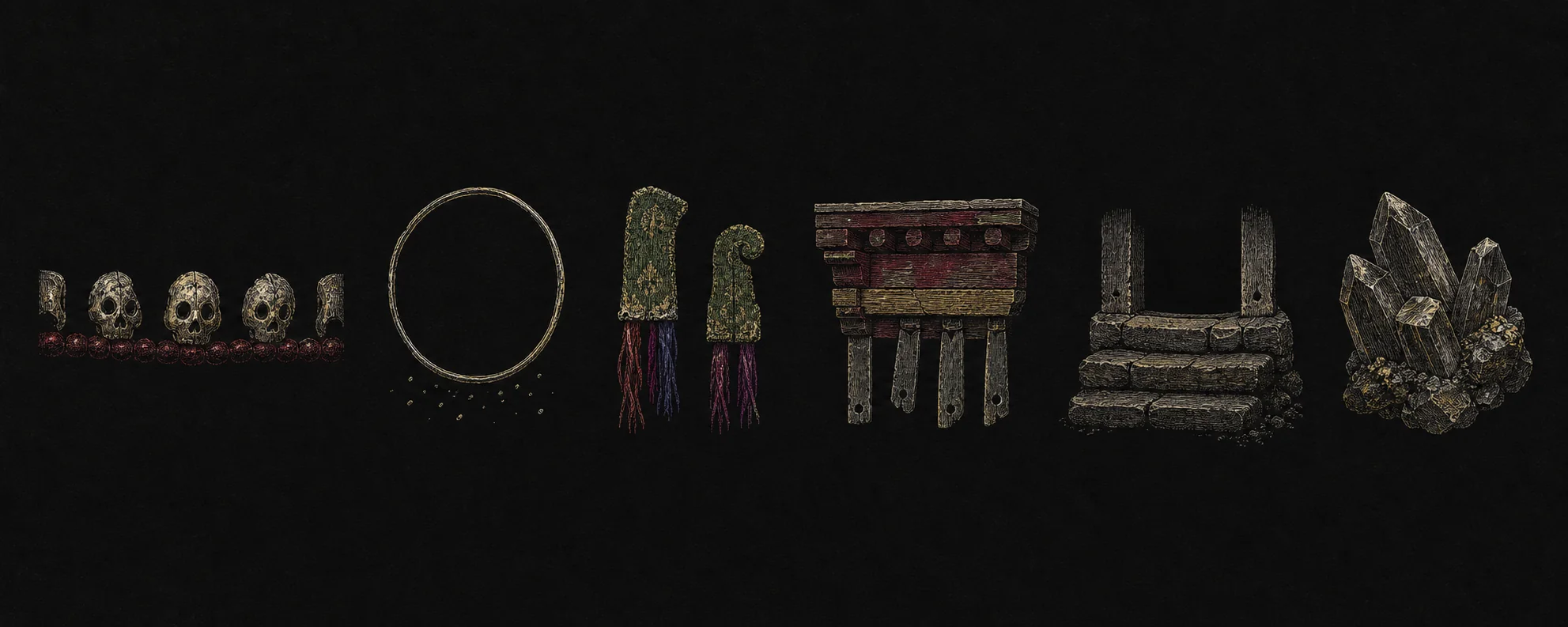
Crown, reflector, curl, axis, eave, and threshold move across stone, metal, leather, textile, wood, and paper. The same line gains a different weight, touch, and sense of time on every surface. This is the chapter between story and body.
WHY MATERIAL MATTERS
Story gives it direction, material makes it liveable.
A figure can be viewed from afar, but jewellery must live with the body. Metal meets warmth, mineral changes with every turn, and cord or chain decides where a work rests at the collar. To understand material is not to leave the story, but to see how it reaches the hand.
Six families of line, changing across eighteen surfaces.
Each family begins with a recognisable visual cue, then enters three physical media. Compare one motif across the row, or follow the surface whose touch feels closest to you.
01
Rhythm of the crown
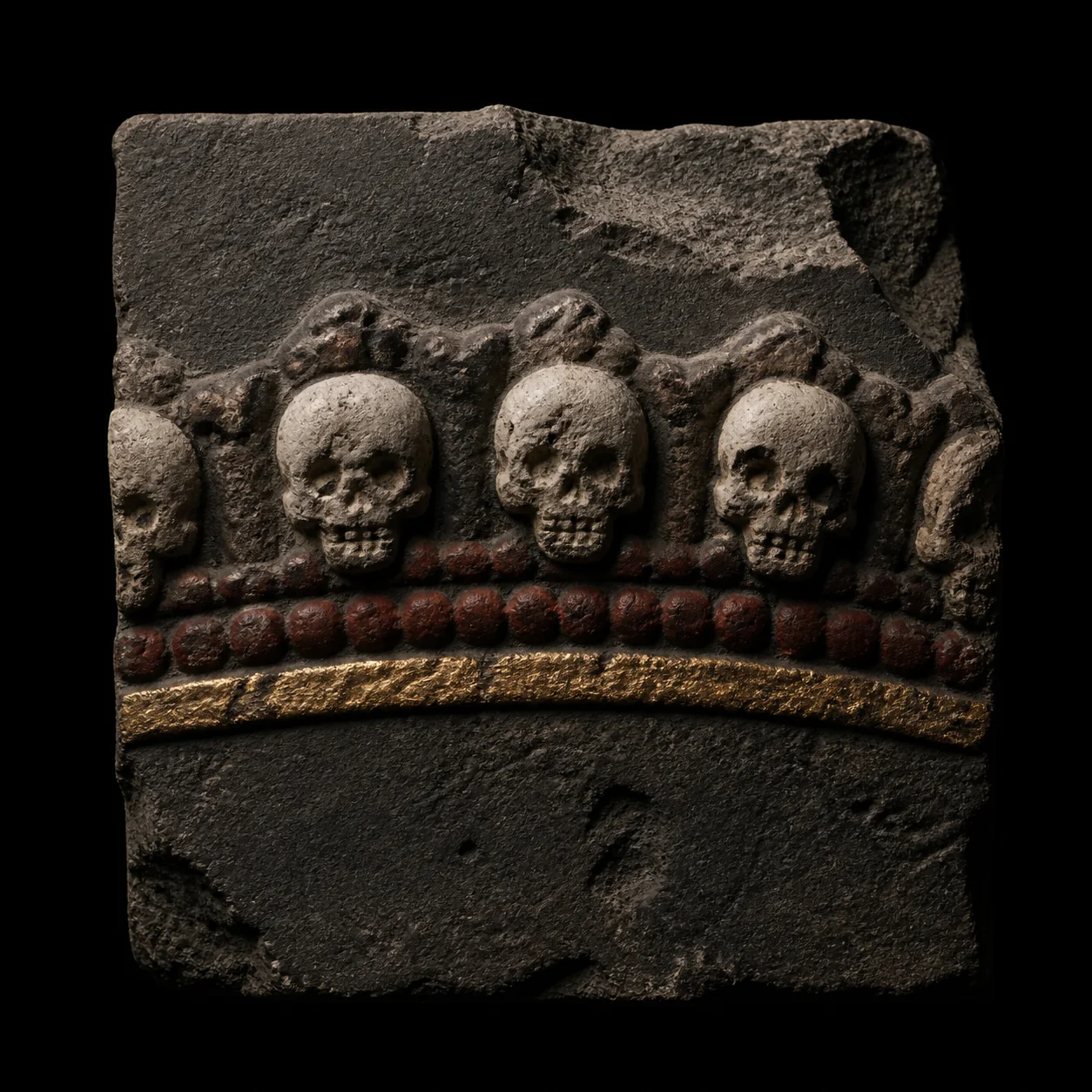
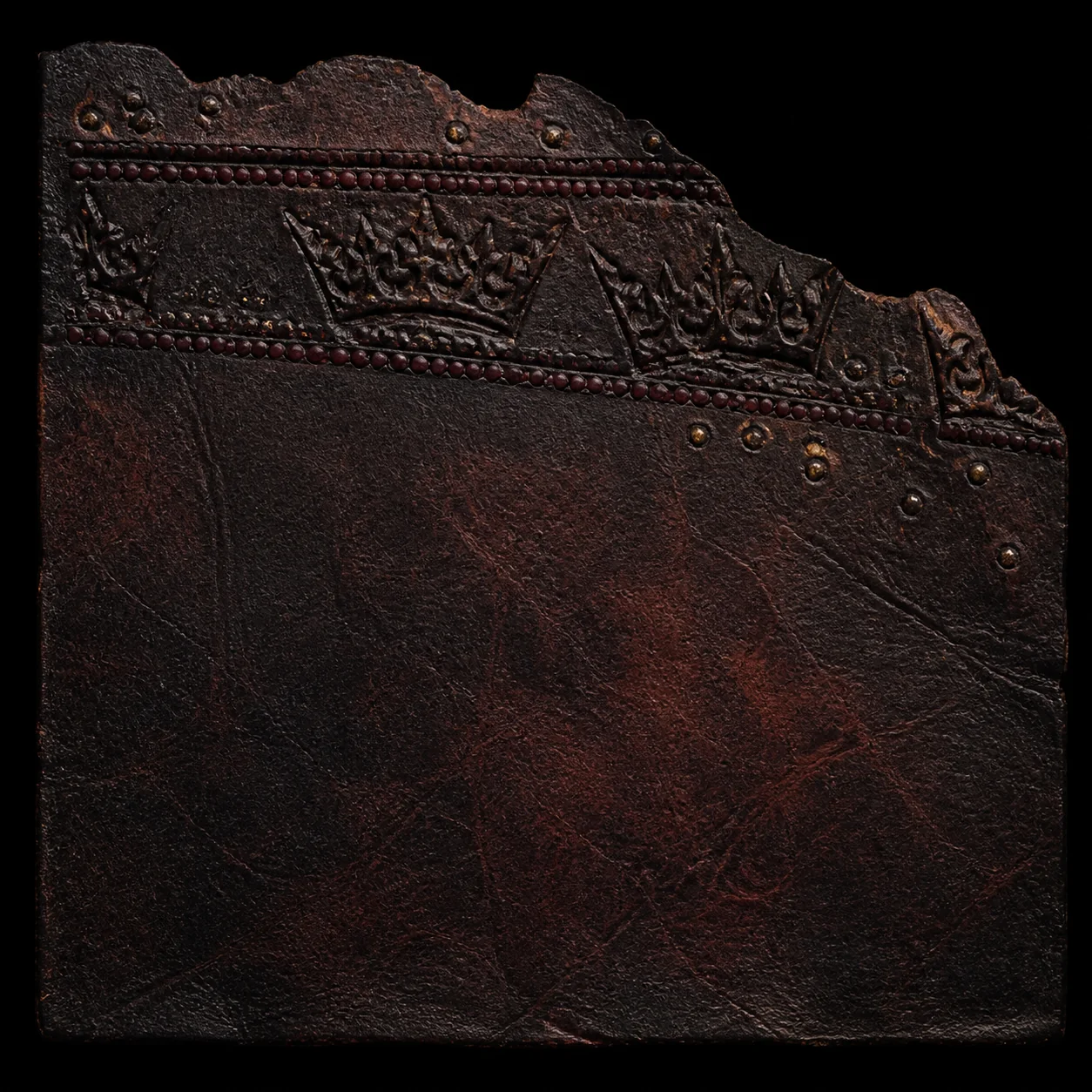
The same rising and falling edge changes weight, sound, and touch as it moves through basalt, hammered metal, and dark wine leather.
Basalt reliefGrain and wear press the crown edge into stone.Hammered old metalRaised metal points gather along the edge; a red bead rail settles below.Wine leather embossingSoft leather turns a sharp contour into a low impression.
02
Reflector and beads
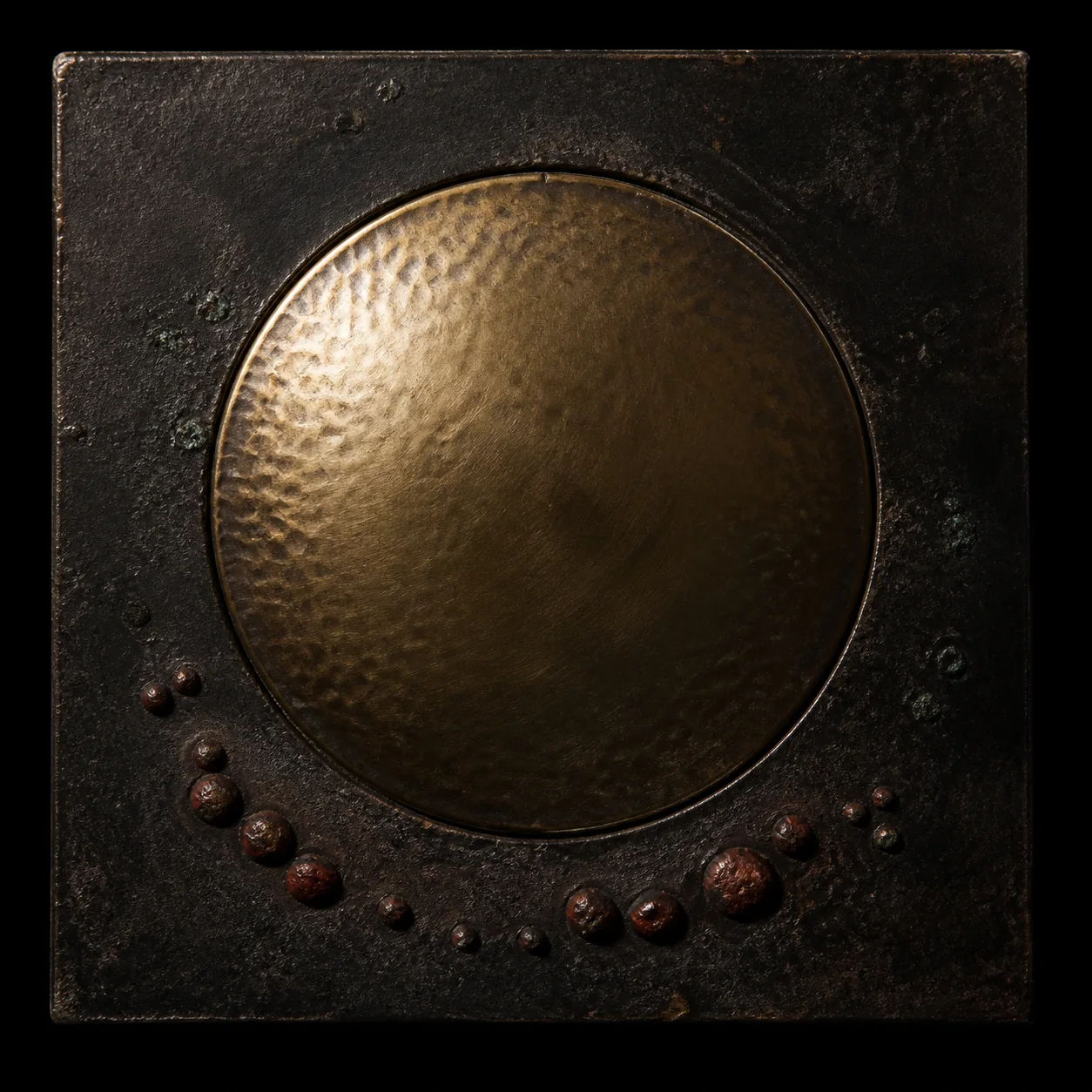
The round surface shines in bronze, remains tactile on paper, and sinks into mineral pigment—three distances held by one centre.
Old-bronze reflectorHammer marks divide light into small, uneven points.Blind-pressed paperThe circle nearly disappears, revealing its edge only in side light.Mineral-pigment recessA deep-indigo wall holds a ring of old gold and low red points.
03
Paired curls and tassels
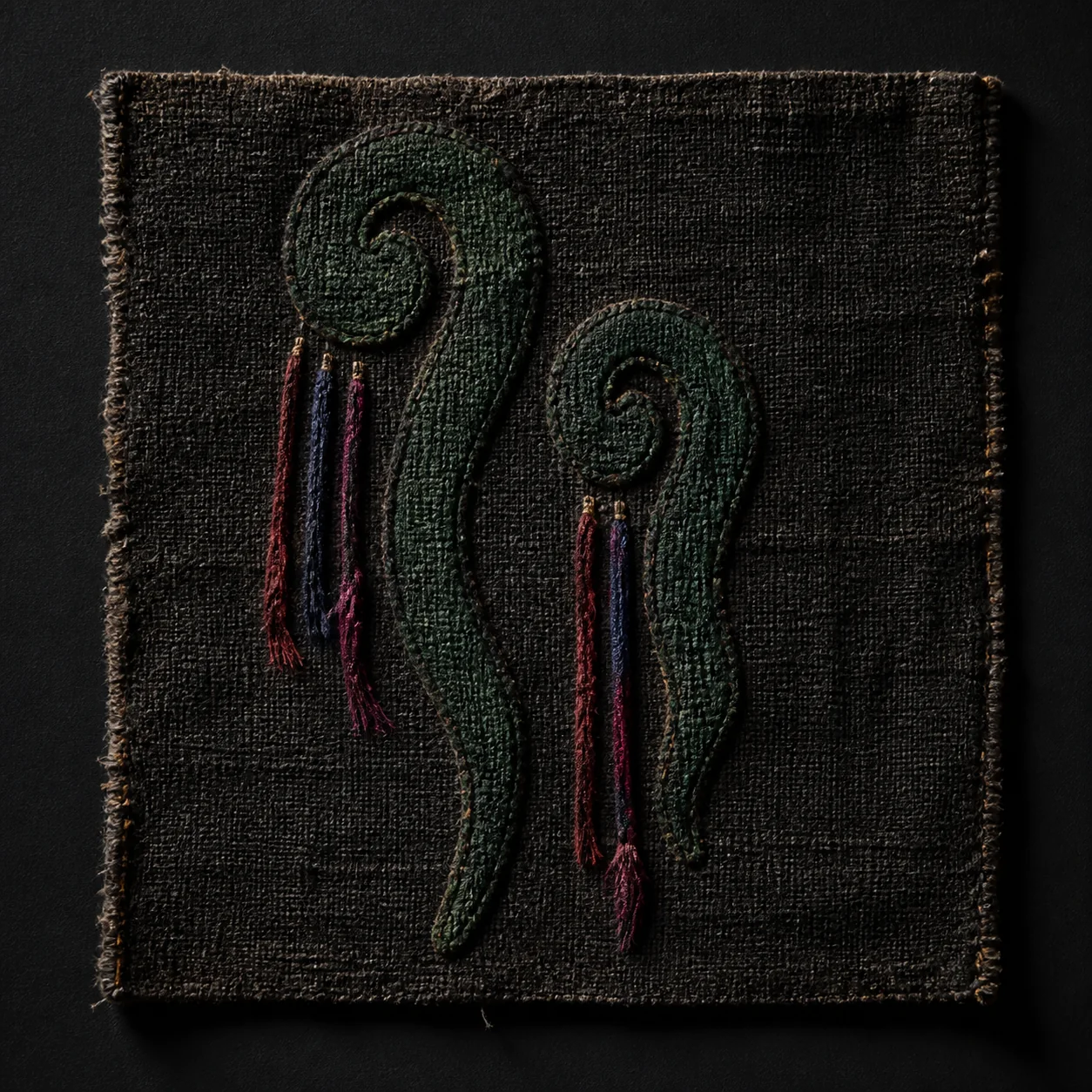
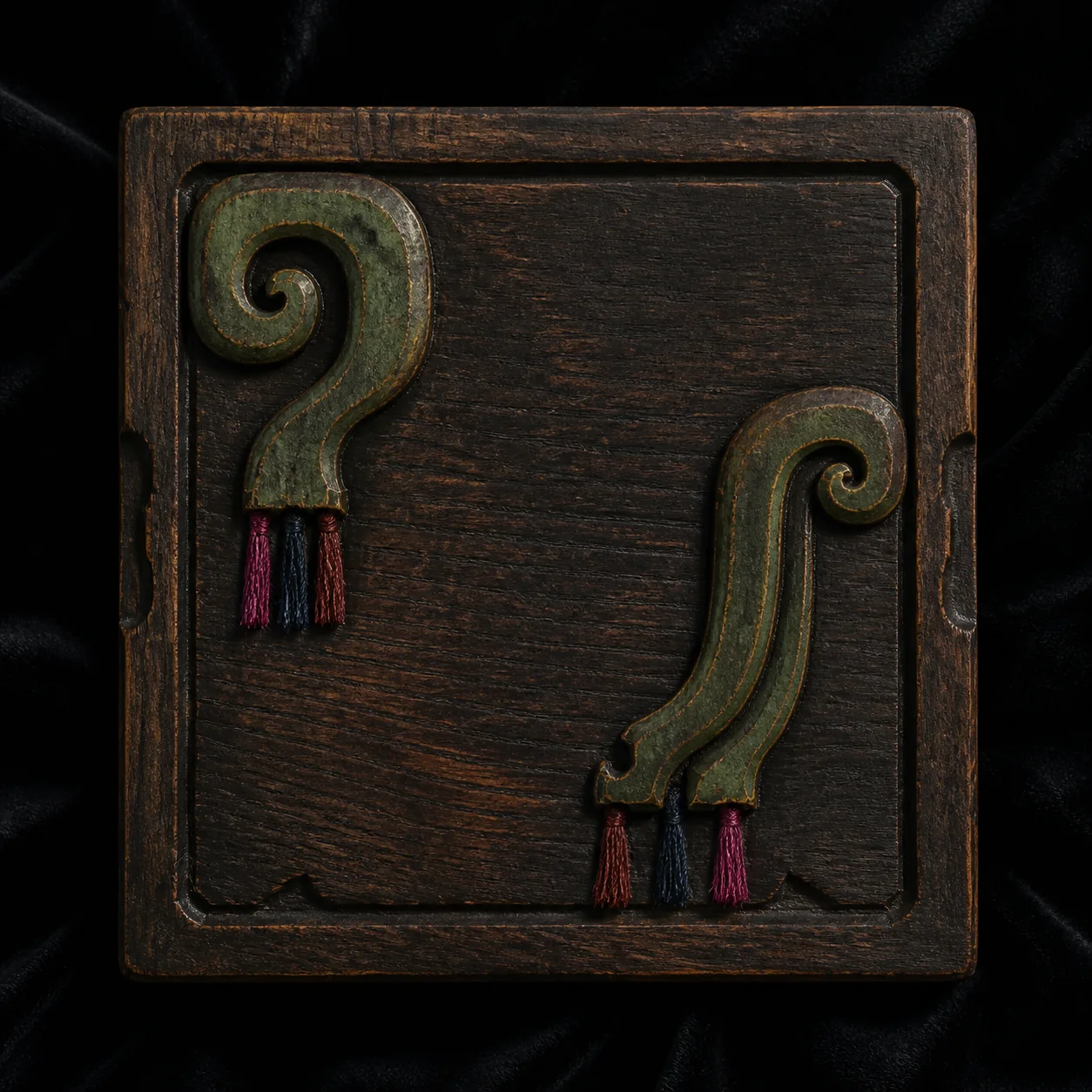
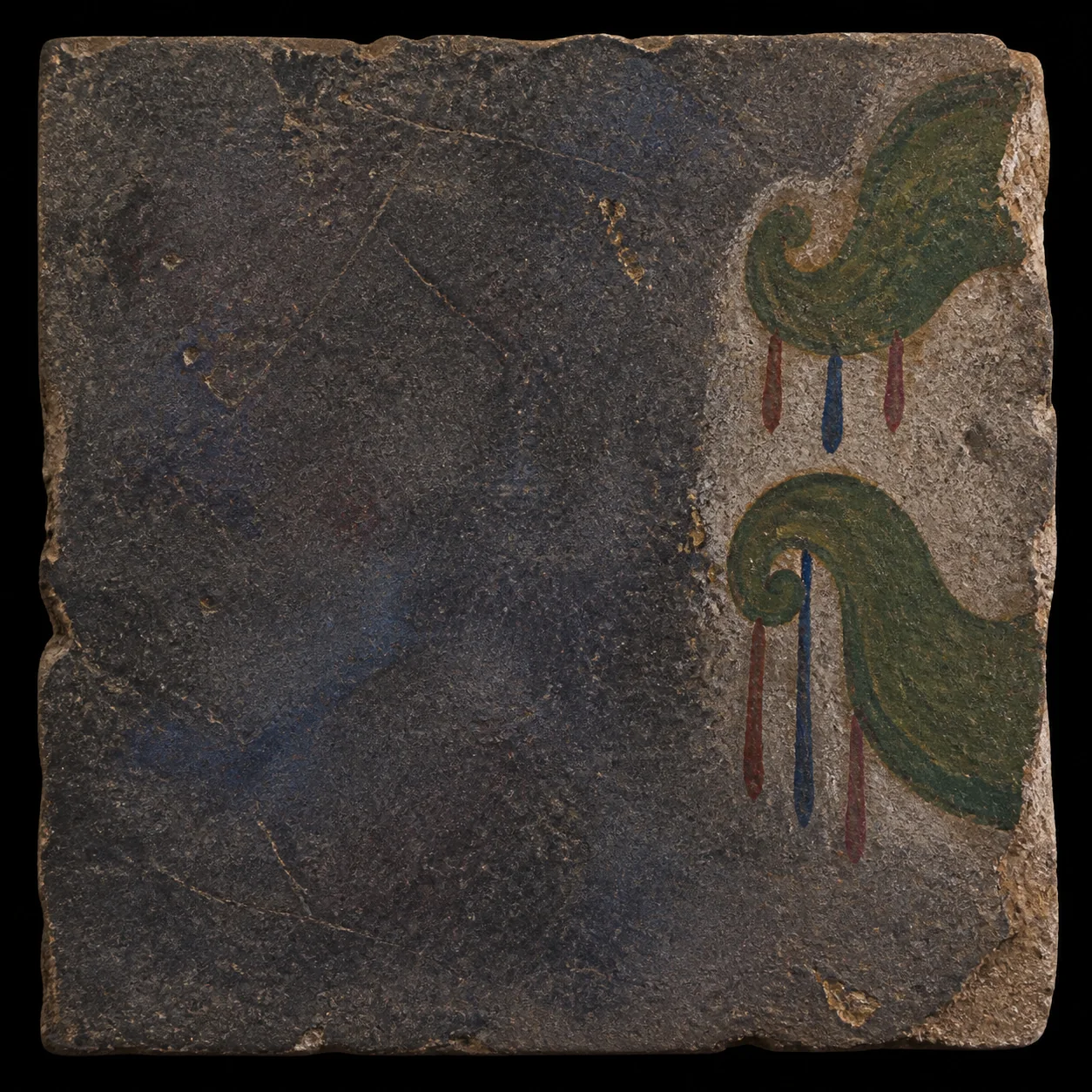
Two curls answer one another while keeping different heights and directions; short tassels return gravity to the still form.
Deep-green textileWoven thread softens the curls as wine, blue, and violet ends descend.Inlaid woodThe wood keeps the tool marks; paired curls face each other across empty space.Mineral-pigment panelGreen curls emerge from a grey-brown wall, their hand-painted edges left uneven.
04
Black, gold, and wine axis
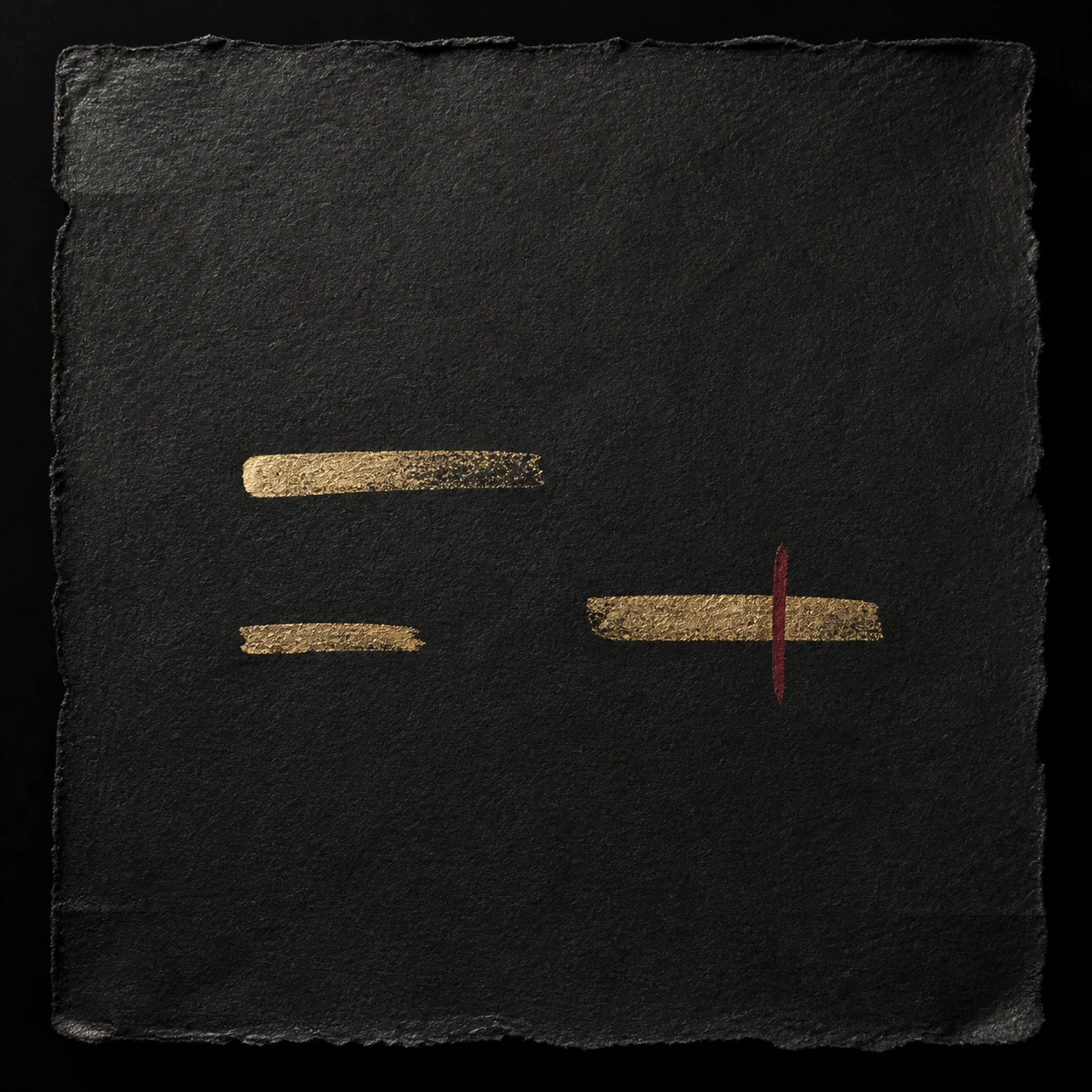
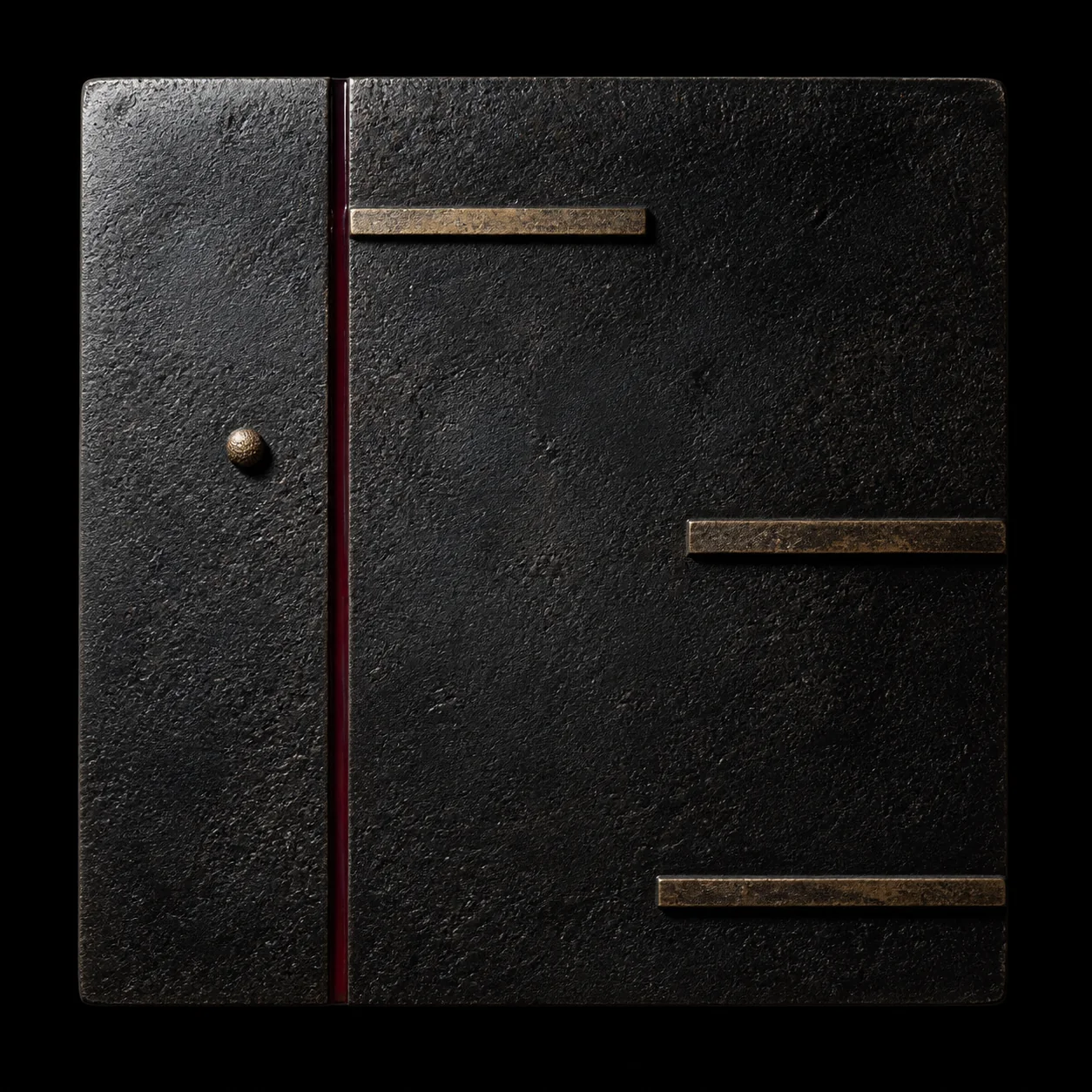
A wine line cuts through black while old-gold marks approach from either side: a pause, or a measure left before beginning again.
Black-paper printPaper edge, old gold, and wine meet in one restrained break.Black lacquer inlayLacquer absorbs most light, leaving a few metal measures to rise.Oxidised metalA wine seam crosses the metal plate; a round point rests away from centre.
05
Eaves and hanging tabs
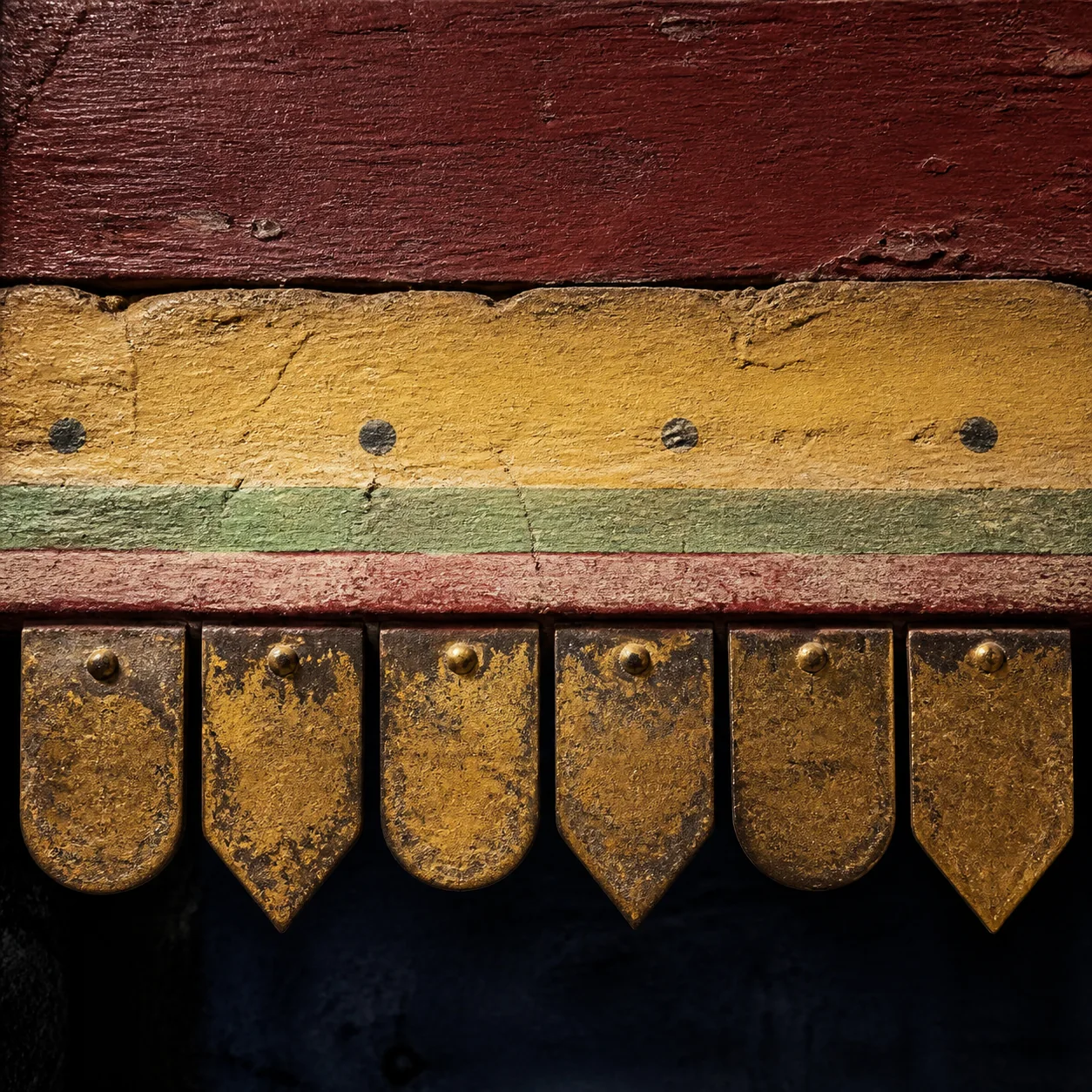
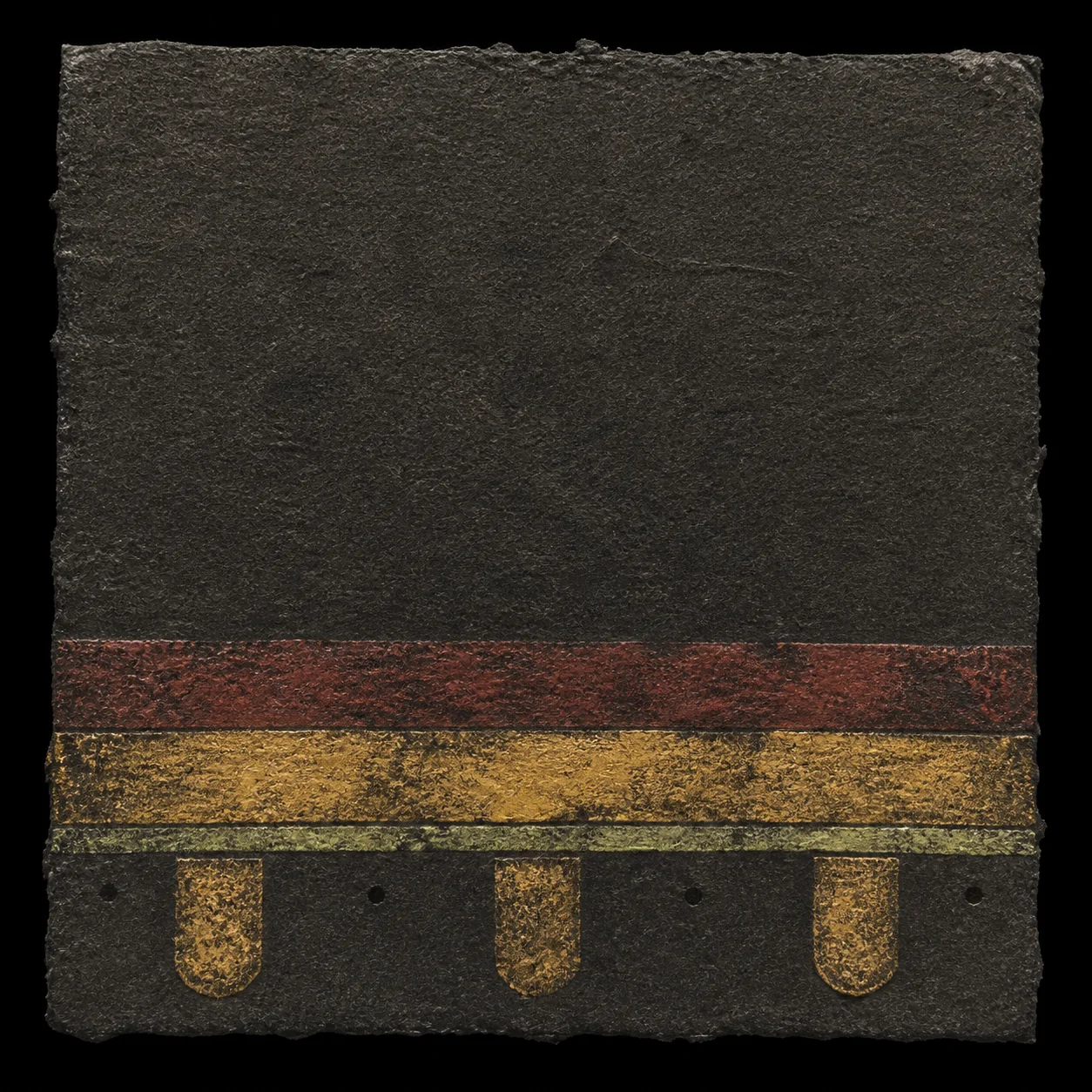
Wine, mineral yellow, and green form an architectural edge; hanging tabs carry colour downward and make the direction of wind visible.
Old-metal panelColour bands and five tabs give the worn surface an architectural weight.Stone reliefRed and yellow stone layers sit low; green tabs keep a narrow interval.Pressed-paper edgeCoarse paper turns architectural colour into an edge that can be turned.
06
Threshold and passage
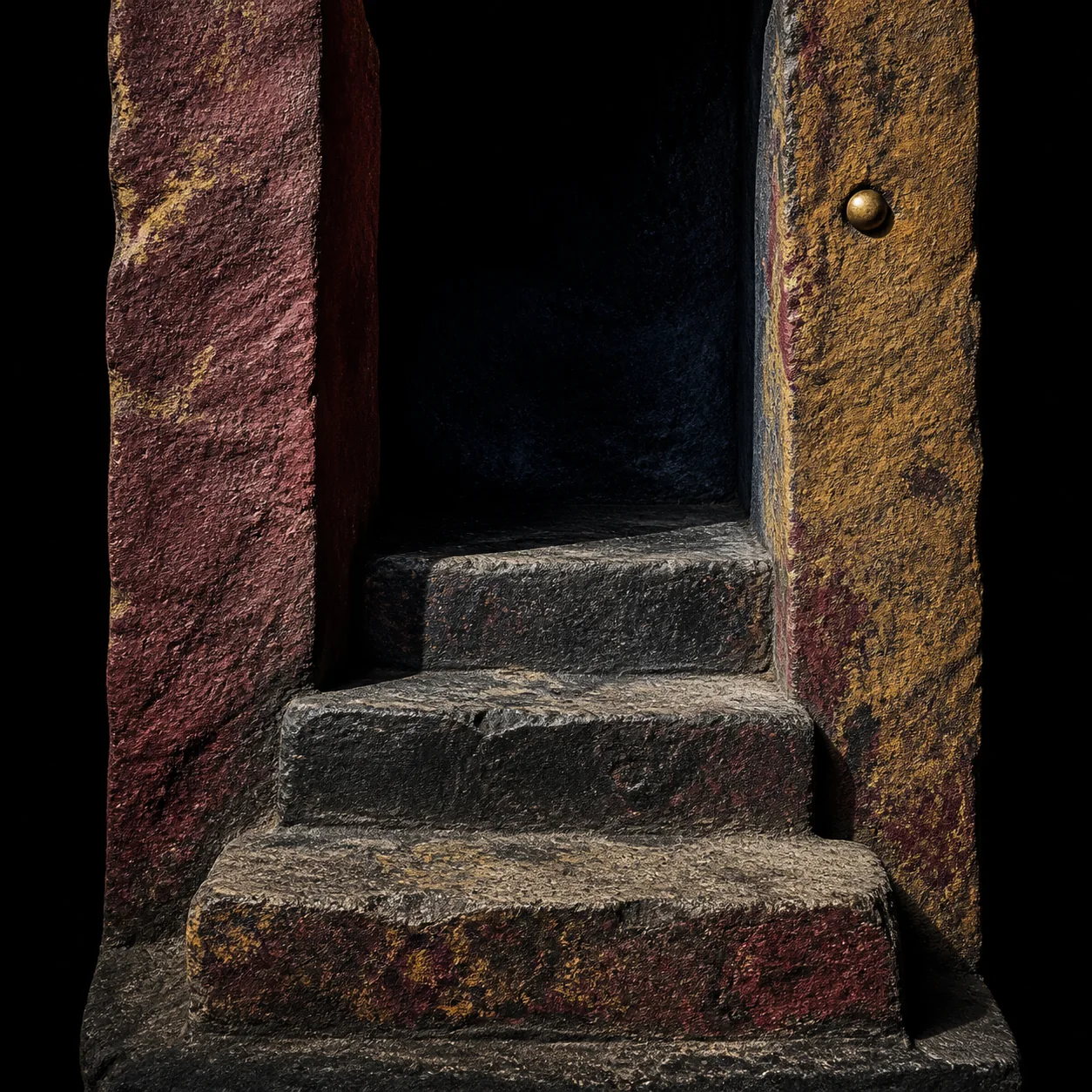
A doorway divides inside from out: one side receives the road behind, the other keeps a space not yet seen. Arrival and departure share one boundary.
Charcoal engraving bandCrown edge, reflector, eaves, steps, and mineral cluster appear along one dark band.Stone entranceThree stone steps carry the eye into a blue-black doorway; wine remains at the side.Folded-paper passagePaper layers press out a narrow door; an old-gold edge turns at its deepest point.
FROM SURFACE TO HAND
Six gestures, giving material a human scale.
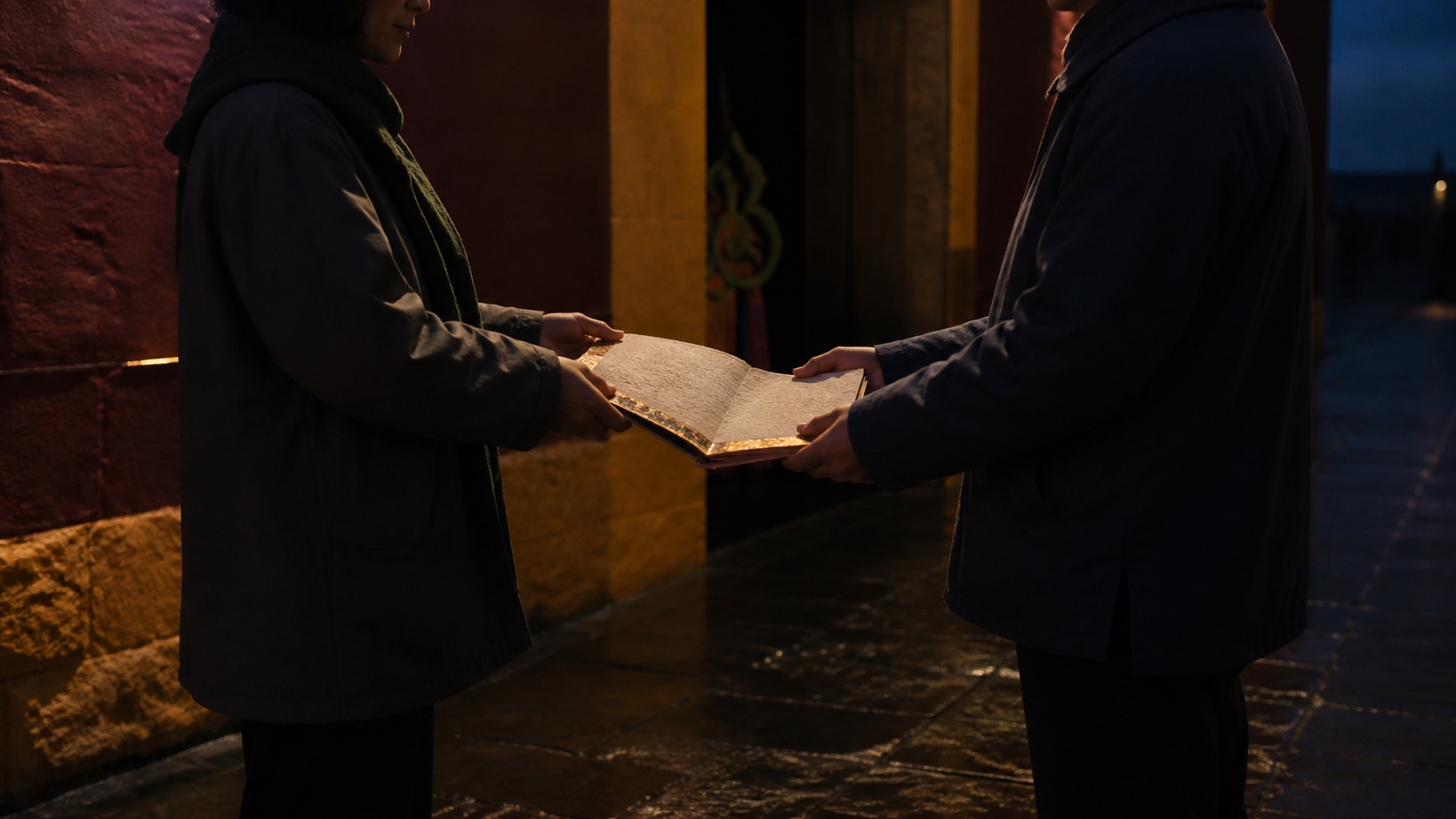
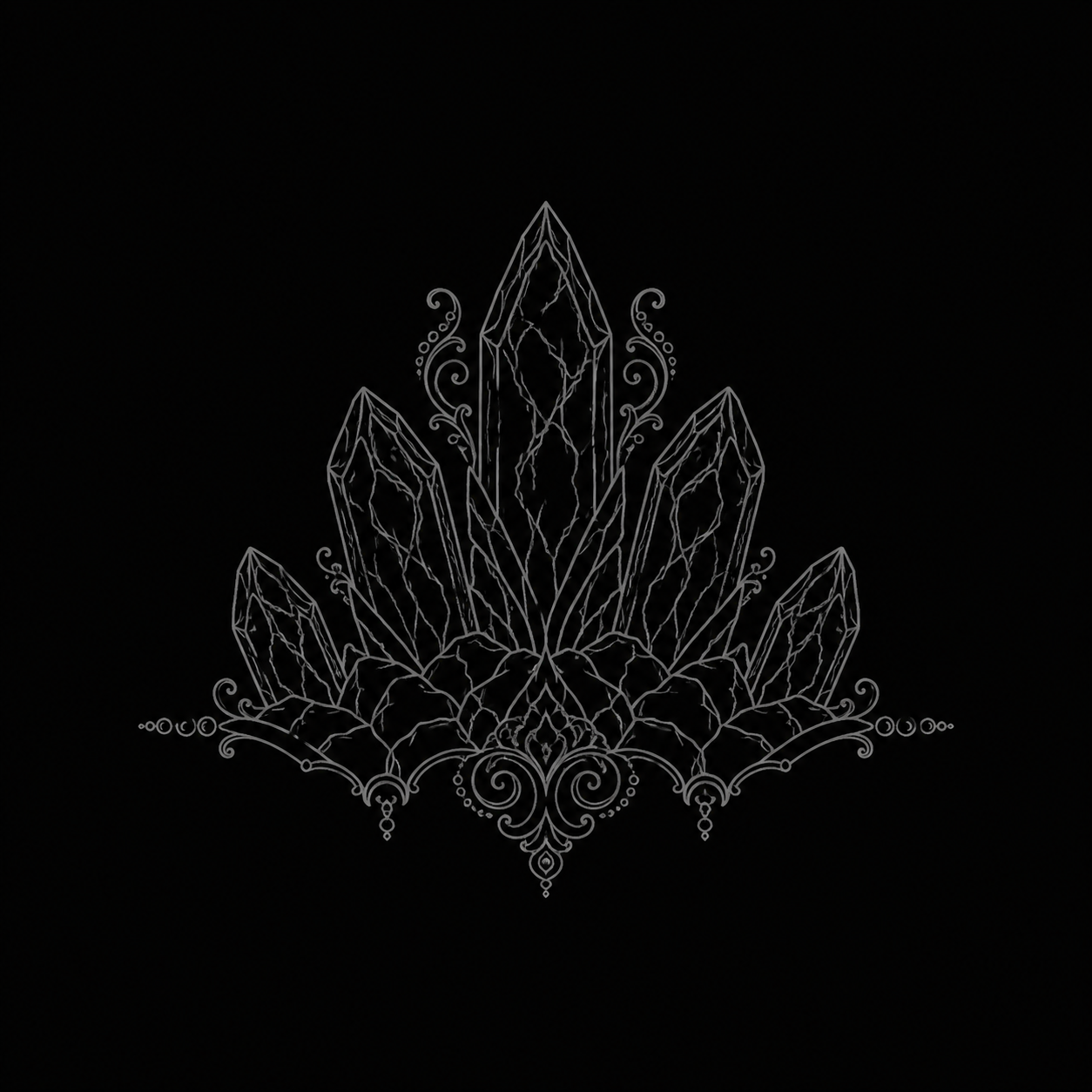
Mineral cluster, folio, material axis, hands, and specimen form a sequence of looking: see the surface, open the record, then place the object in the palm. Material is never abstract; its meaning is completed through touch, wear, and keeping.
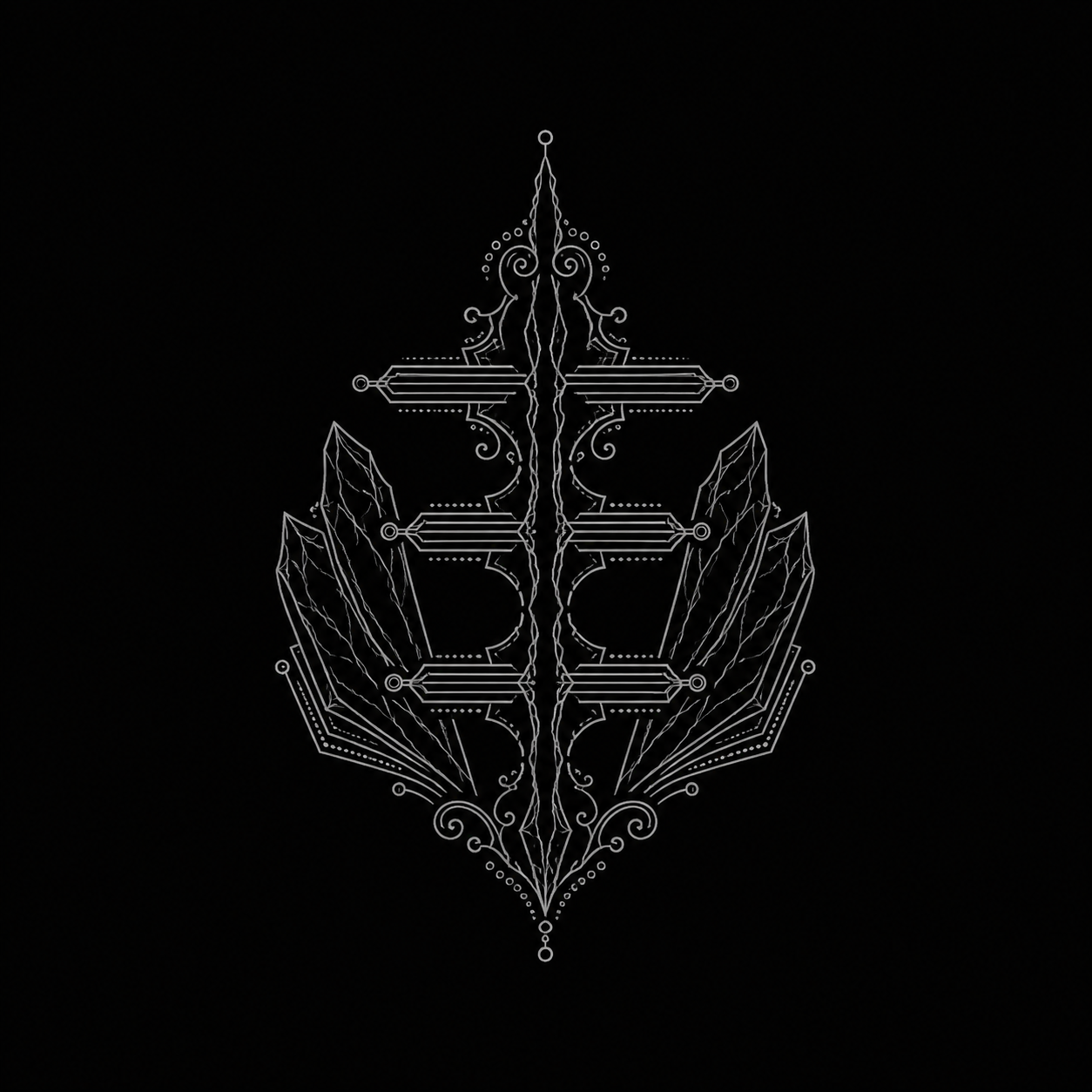
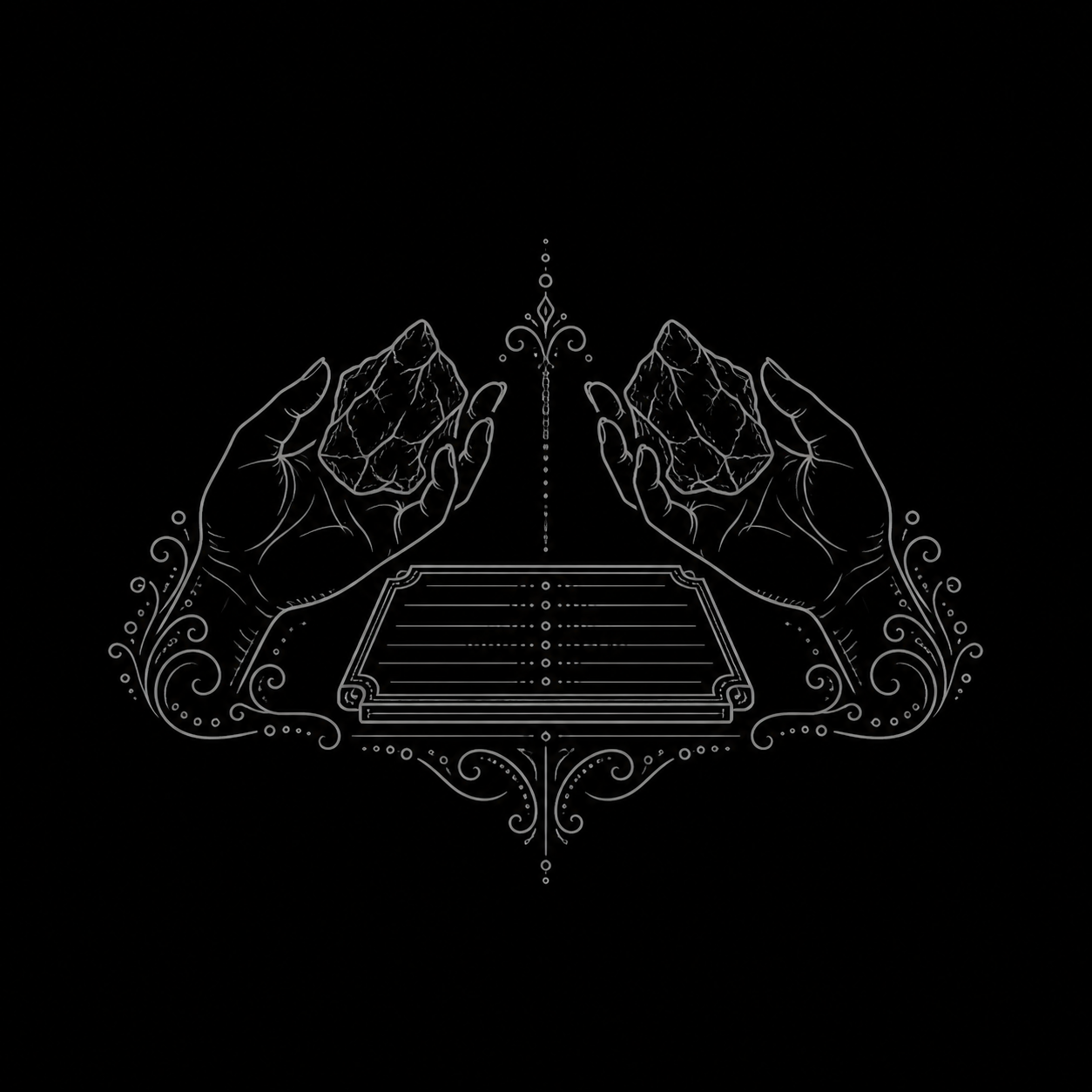
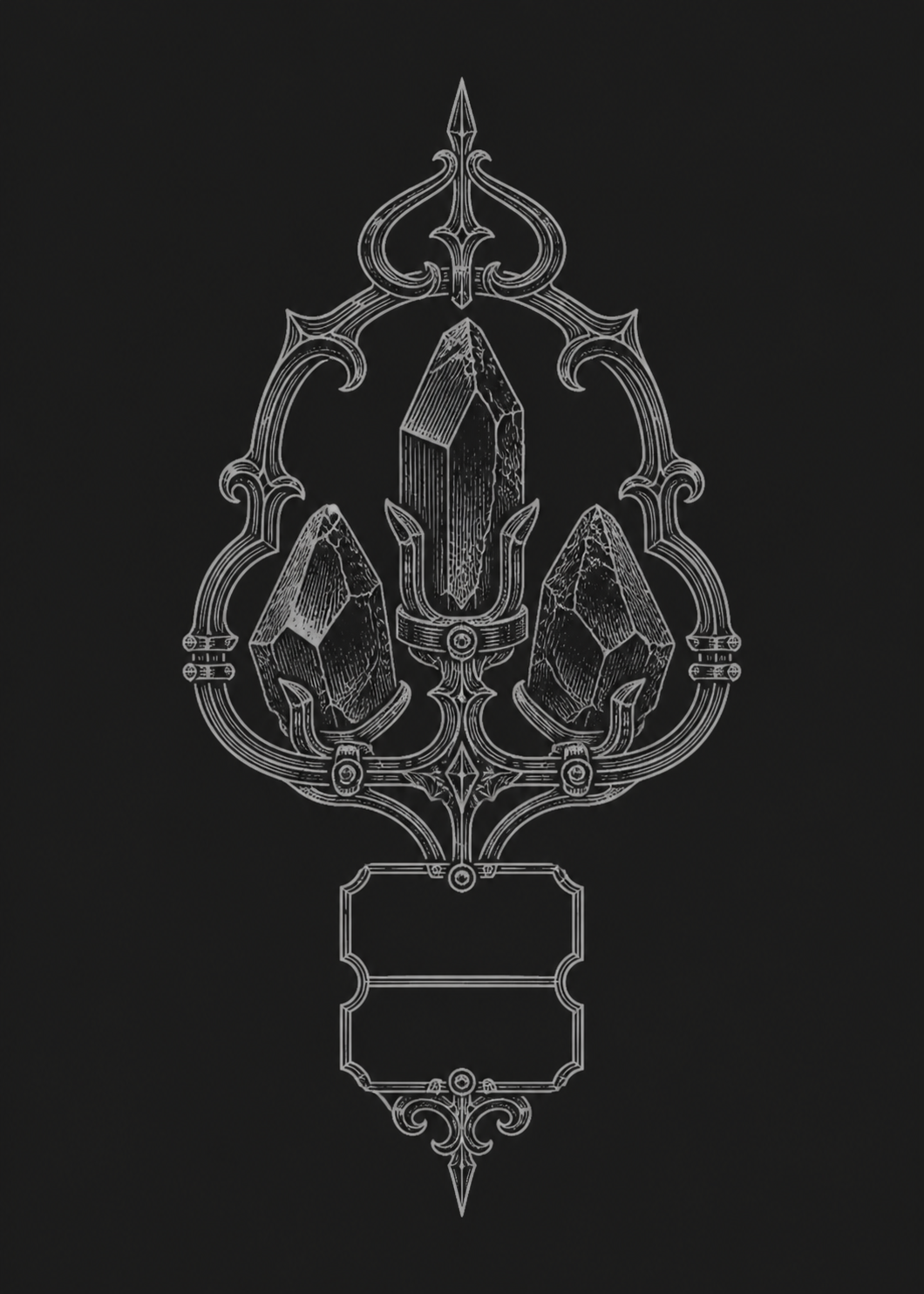
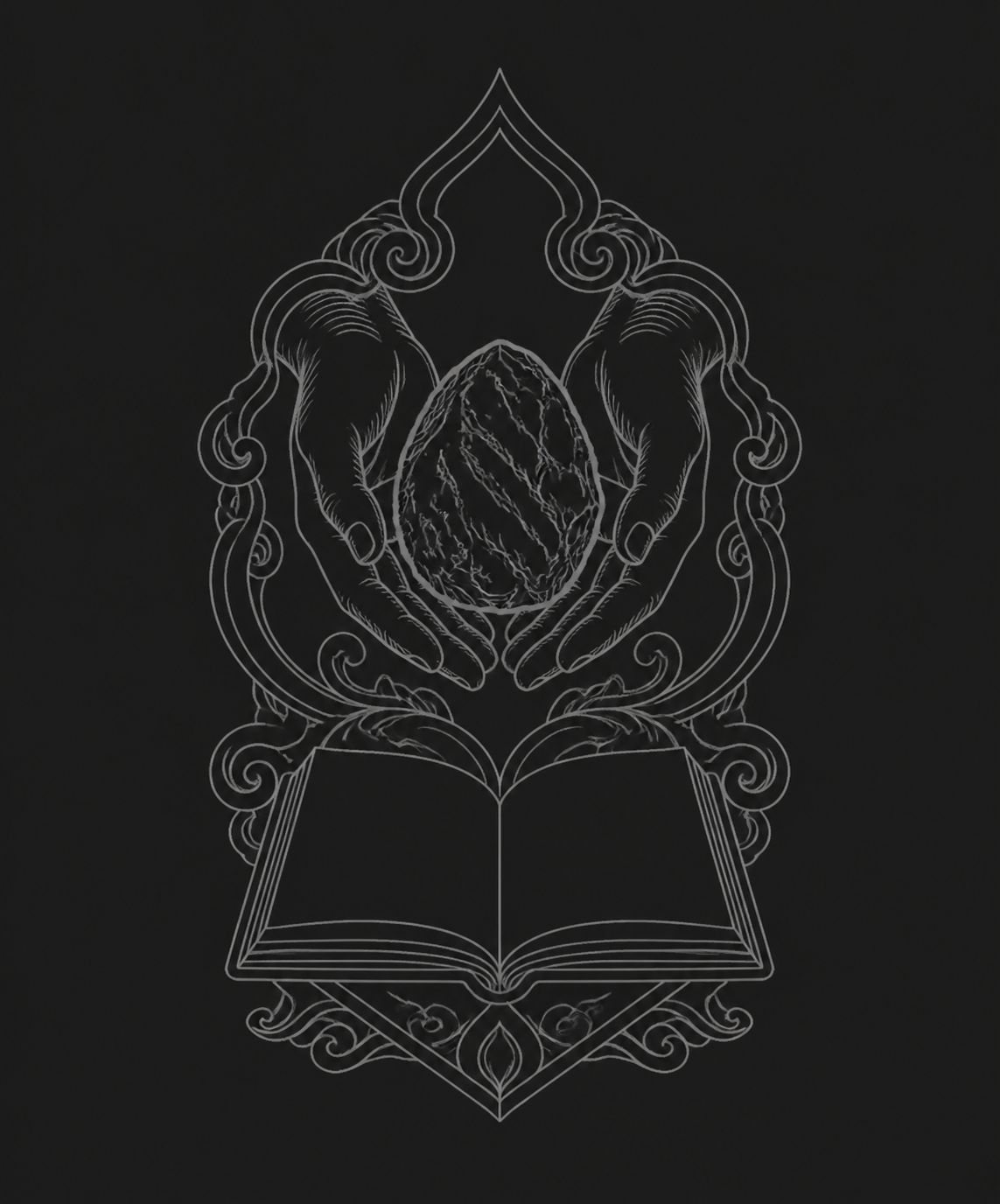
01Mineral clusterCrystals gather from below; their points keep different heights and directions.02Archive folioAn open folio holds a round specimen; bead points leave an index below.03Material axisStone, metal line, and textile unfold along a vertical axis.04Hands and mineralTwo hands hold specimen and folio, giving material its first human scale.05Mineral specimen archiveA mineral specimen is stored upright; a label below records where it was seen.06Hands, mineral, and folioPalm, crystal face, and open paper form one close act of looking.
THREE QUESTIONS BEFORE CHOOSING
In the end, ask not only what it means, but how it will live with you.
01 / LIGHT
How does it receive light?
Round, crystalline, and oxidised surfaces hold different kinds of light. Compare front and side views, then decide whether you prefer a quiet shadow or a clearer flash.
Pendant placement, earring length, and the direction of cord or chain change the silhouette while walking or turning. Imagine where it would rest on you, then choose the form that feels most like your own.
When choosing for yourself, imagine your most-worn collar and colours. When choosing for someone else, recall their everyday gestures, then leave their name and one true line inside the parcel.
Imagine it at the chest, ear, or beneath a collar. Distance shapes its relationship with you and what another person sees first.
02
From distance to detail
Begin with the whole silhouette, then move closer to metal relief, hand scale, and wearing distance. The piece you truly want is the one you keep returning to.
03
Let it enter life
Choose the work you would reach for on ordinary days. Story draws you near; the way you live with material is what makes it stay.